27. Mediation
2025-11-11
Mediation
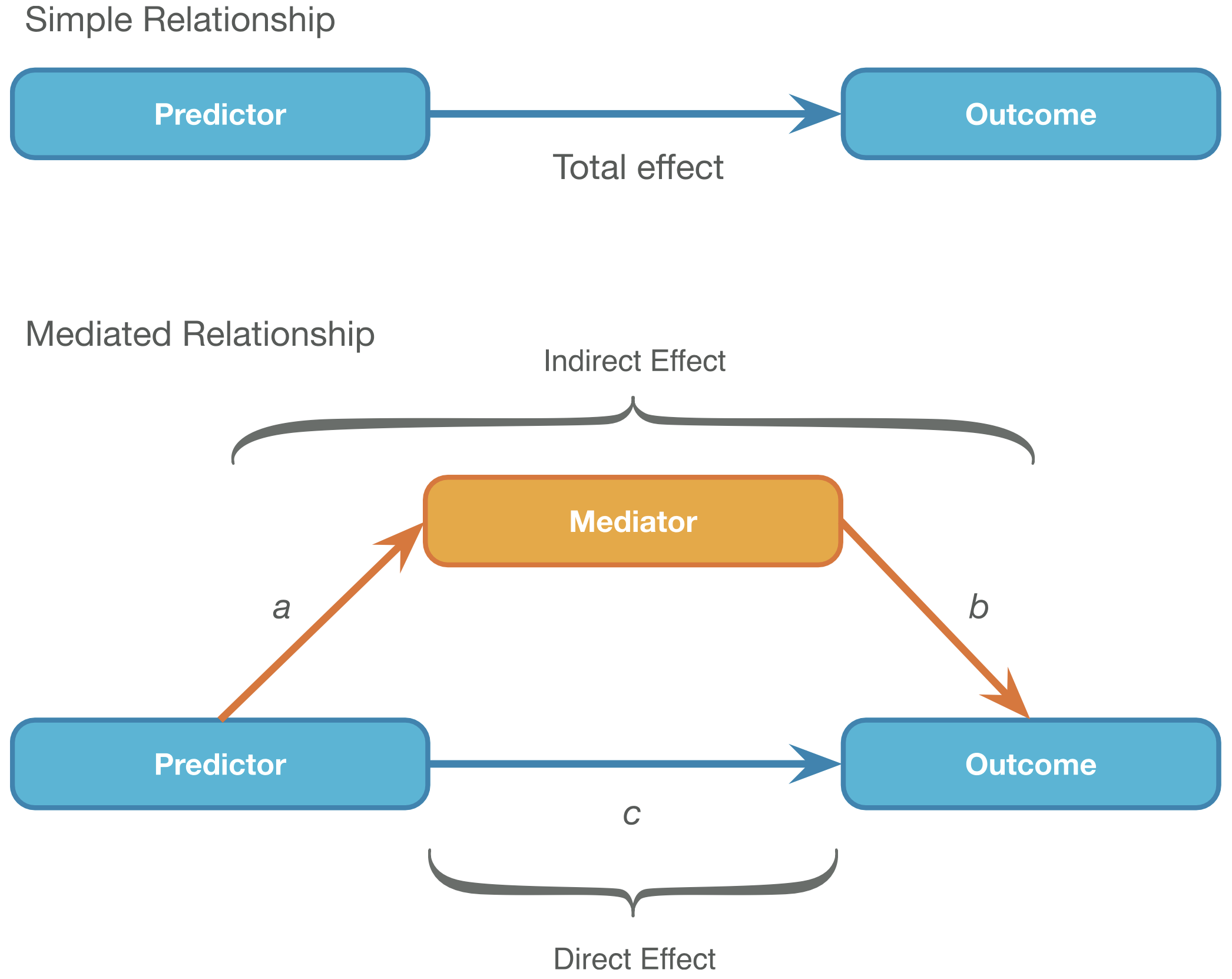
In statistics, a mediation model is one that seeks to identify and explain the mechanism or process that underlies an observed relationship between an independent variable and a dependent variable via the inclusion of a third hypothetical variable, known as a mediator variable (also a mediating variable, intermediary variable, or intervening variable).
Source: WIKIPEDIA
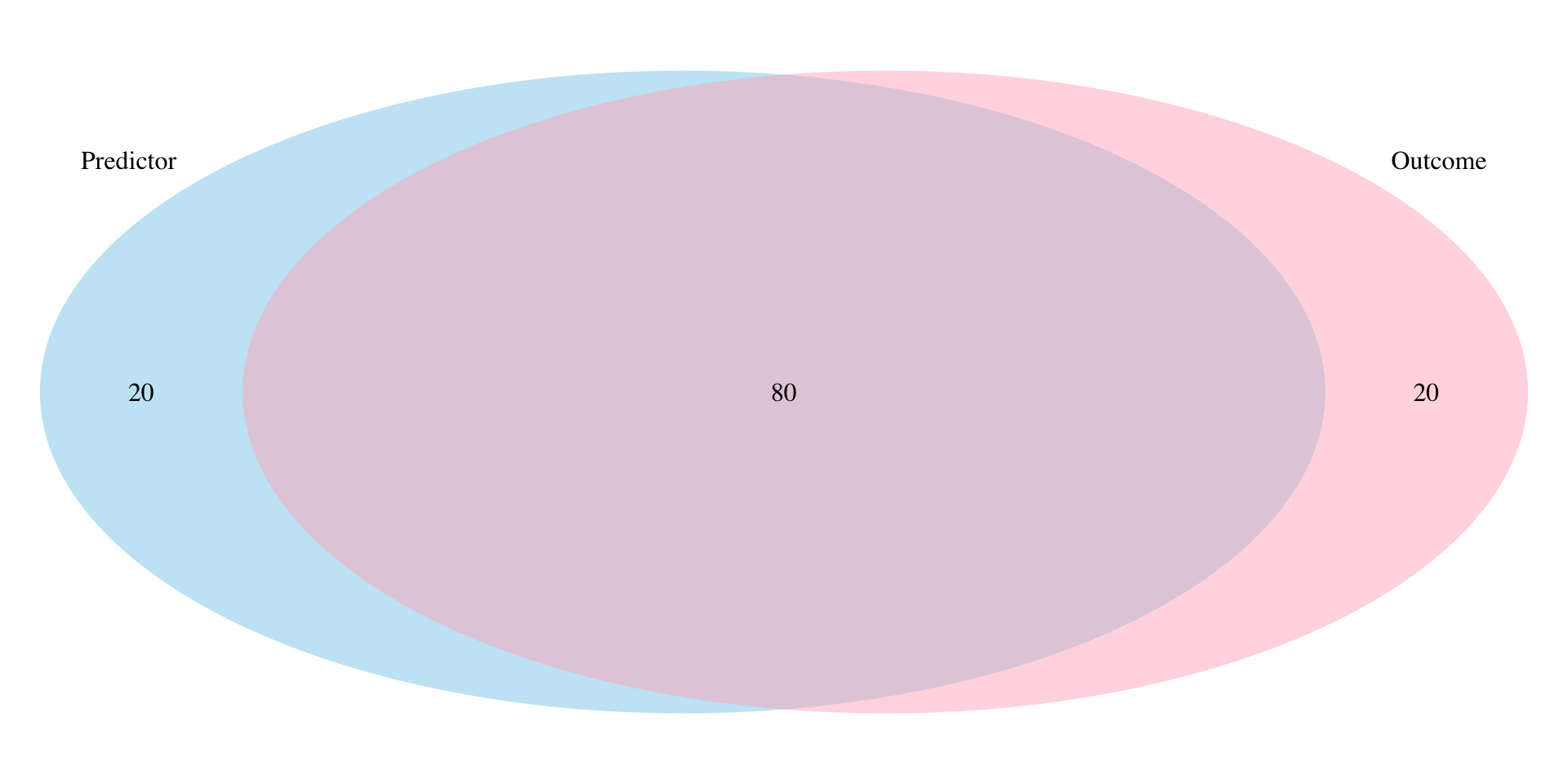
Venn diagrams - effect
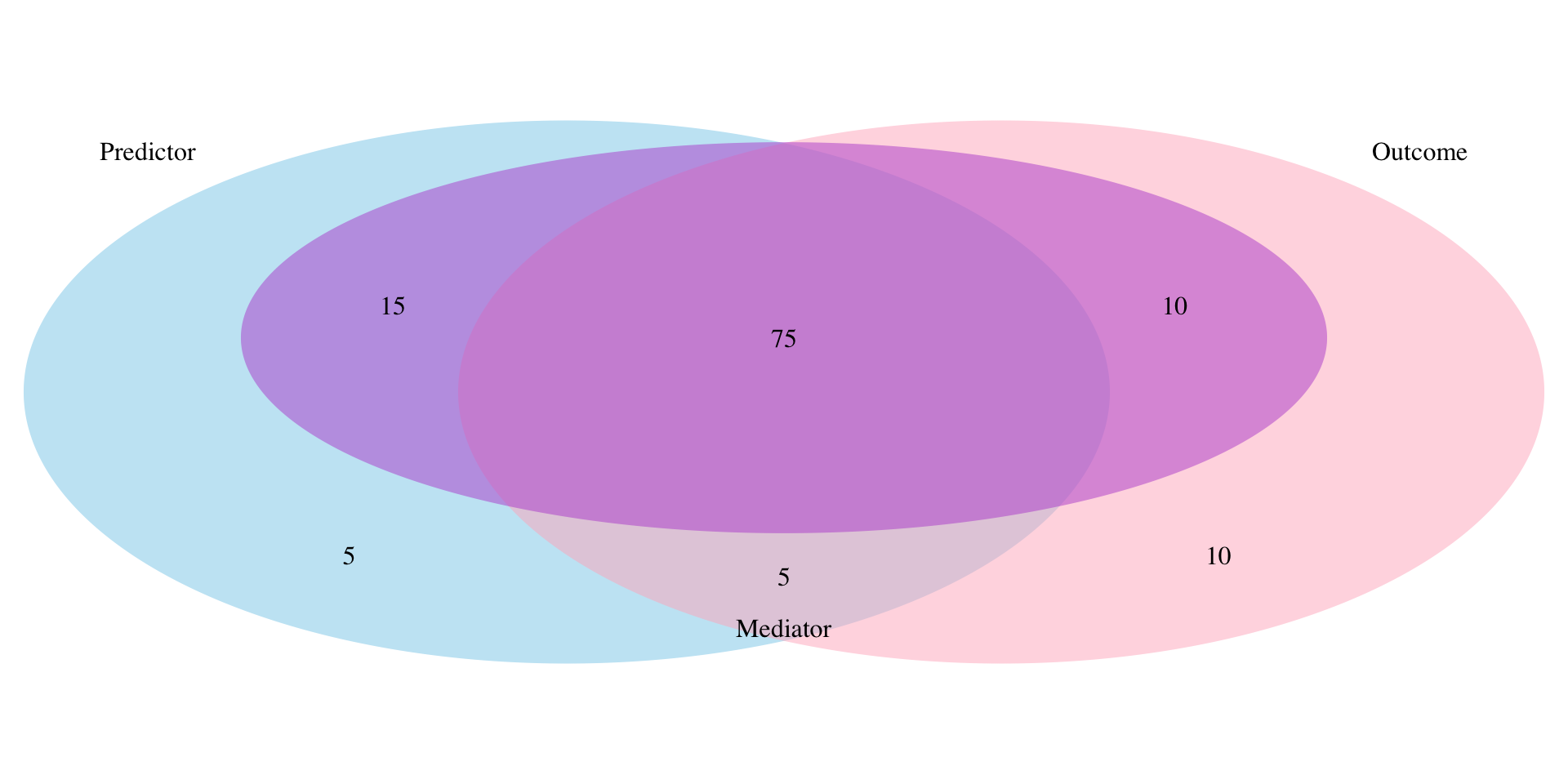
Venn diagrams - mediator
Example
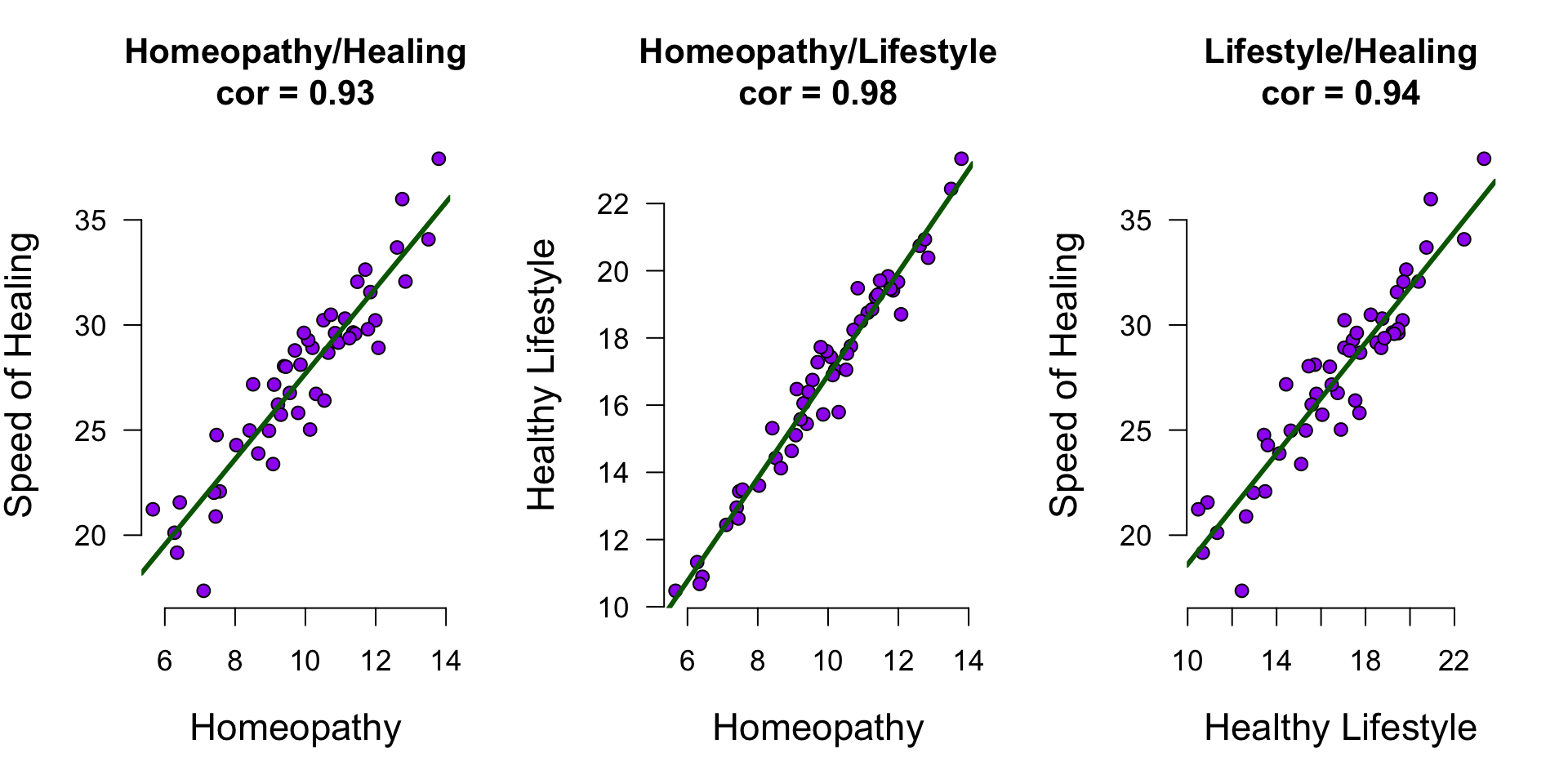
Does the speed of recovery after sickness improve with the use of alternative medicine or is this effect mediated by a healthy lifestyle?

Total effect
- Total effect:
- \(\widehat{\text{Outcome}} = b_0 + b_t \text{Predictor}_i\)
Mediation paths
You found my sneaky text to create space! You are awesome. Muahahahahahahahahahahahahahahahahahahahahahahahaha haha…hah.. uhhhh
- Total effect:
- \(\widehat{\text{Outcome}} = b_0 + b_t \text{Predictor}_i\)
- Mediator effect (a):
- \(\widehat{\text{Mediator}} = b_0 + b_a \text{Predictor}_i\)
- Combined effect (b + c):
- \(\widehat{\text{Outcome}} = b_0 + b_{c} \text{Predictor}_i + b_b \text{Mediator}_i\)
Fit 3 models
- Total effect:
- \(\widehat{\text{Outcome}} = b_0 + b_t \text{Predictor}_i\)
- Mediator effect:
- \(\widehat{\text{Mediator}} = b_0 + b_a \text{Predictor}_i\)
- Combined effect:
- \(\widehat{\text{Outcome}} = b_0 + b_{c} \text{Predictor}_i + b_b \text{Mediator}_i\)
Extract beta coëfficients
- Total effect:
- \(\widehat{\text{Outcome}} = b_0 + b_t \text{Predictor}_i\)
- Mediator effect:
- \(\widehat{\text{Mediator}} = b_0 + b_a \text{Predictor}_i\)
- Combined effect:
- \(\widehat{\text{Outcome}} = b_0 + b_{c} \text{Predictor}_i + b_b \text{Mediator}_i\)
View beta coëfficients
[1] 2.035573[1] 1.530447[1] 0.9725824[1] 0.5470875
Path plot
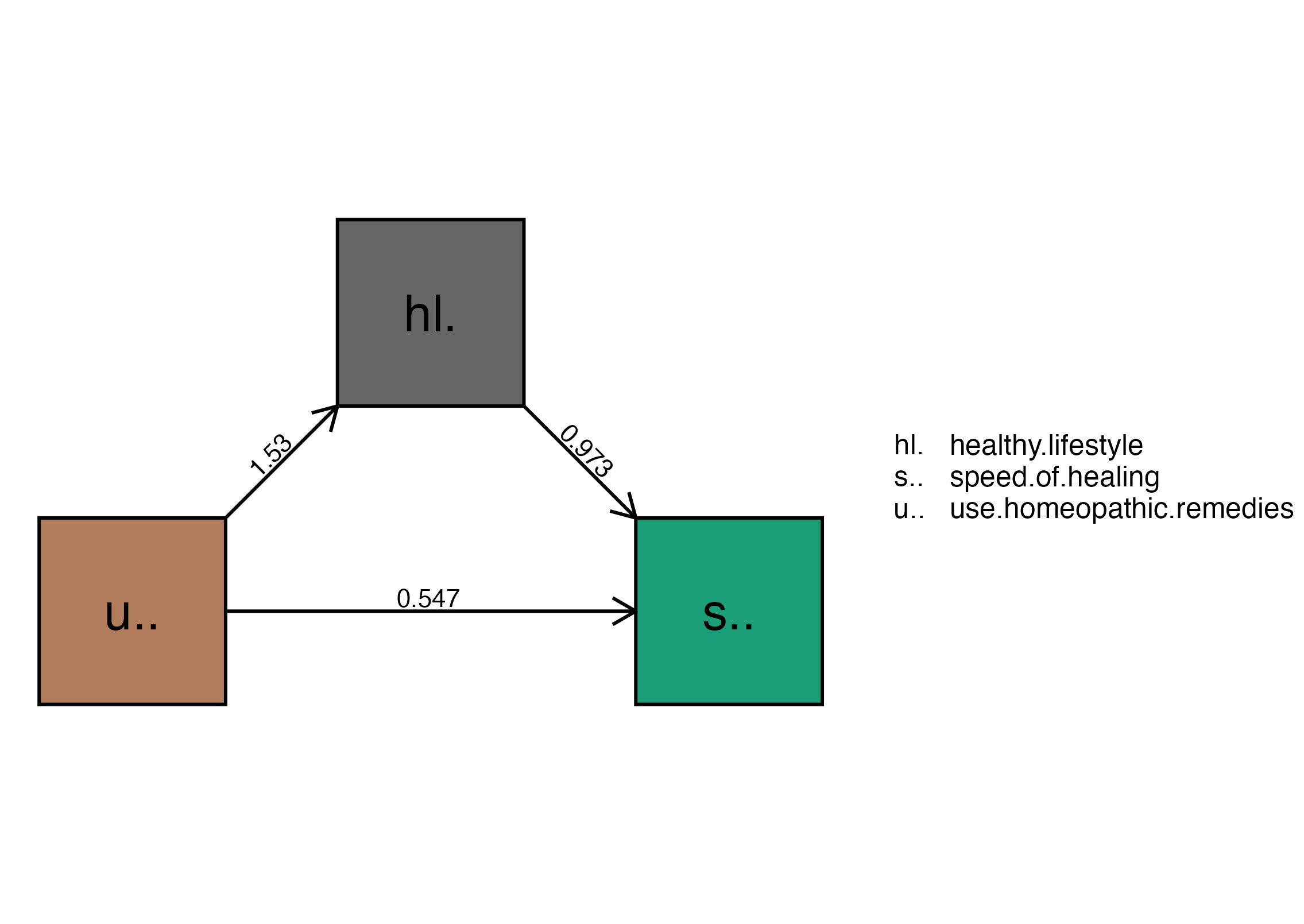
Visual
Calculate indirect effect
\(a \times b = b_a \times b_b\)
[1] 1.488485[1] 2.035573[1] 2.035573
Contact

